Succession planning for surveyors

- Business Development & Marketing
- Property/Built Environment
Surveying Matters, the weekly newsletter by Nina Young
Every week I talk to surveyors who are thinking about what comes next. Very few of them use the word “retire”.
They say they might go part-time. Or keep a handful of their best clients. Or wind things down gradually.
That last one is the one that worries me. Succession planning for surveyors is one of the most important conversations in the profession, and one of the least talked about.
Why is succession planning such a big issue for surveyors?
The surveying profession has an age problem, and it isn’t new. A large share of surveyors are approaching retirement, and new entrants aren’t arriving fast enough to replace them. The RICS Surveying skills report has made that clear.
We usually treat this as a recruitment problem. How do we get more young people in? That matters, and I spend a lot of time on it.
There’s another question we ask far less often. What happens to everything the leavers built?
I mean the firm, the clients, and the judgement that took a whole career to earn. Right now, much of it simply stops when the person does.
One small corner shows the bigger picture
I’ve been learning about mineral surveying recently. It’s one of the most fascinating corners of the profession. Mineral surveyors work above ground and below it. Their work runs from quarries and mineral rights to restoring sites once the work is done. Some of those sites have ended up as Olympic venues and film locations.
It’s a very small specialism, and many of the people in it are approaching retirement. There is no accredited degree in the subject. Almost everything they know was learned on the job, on site, over decades.
In a specialism that small, you can see the problem clearly. The same thing is happening across residential, rural, building surveying and QS practice, just at a scale that’s harder to see.

What happens when a surveyor leaves without a plan?
When a surveyor leaves without a plan, the same things tend to happen:
- The firm closes, even though it had value.
- Clients drift to whoever answers the phone.
- The knowledge leaves with them.
This rarely happens because people don’t care. It happens because, for most owners, the business and the person are the same thing. Their identity is wrapped up in it. That makes leaving an emotional decision as much as a financial one, so it gets put off.
It gets put off until it’s too late to do it well.
I think of it as a house that’s never been surveyed. Everything looks fine until someone wants to buy it.
From the conversations I have, I see a handful of ways out. Most people will use more than one.

How do you sell or pass on a surveying firm?
I wrote about this earlier in the year in Your firm is worth something. Or it is worth nothing. Do you know which? The short version: plenty of firms are worth far more than their owners realise. Others are worth very little once the owner walks out of the door.
The difference is what stays behind. A buyer pays for clients, income and systems that keep working after you’ve gone. If every relationship runs through you, a lot of that value leaves with you.
If you’re starting to think about it, here’s what I’d do:
- Set a date, even a rough one, and work backwards from it.
- List everything you do, then hand it over in stages.
- Let your successor take every new client from day one.
- Agree how you’ll measure each stage before you hand it over.
- Get your processes out of your head and written down.
None of this happens quickly. The earlier you start, the more choice you have. Leave it late and you’ll be selling in a hurry.
How do you pass on your knowledge before you retire?
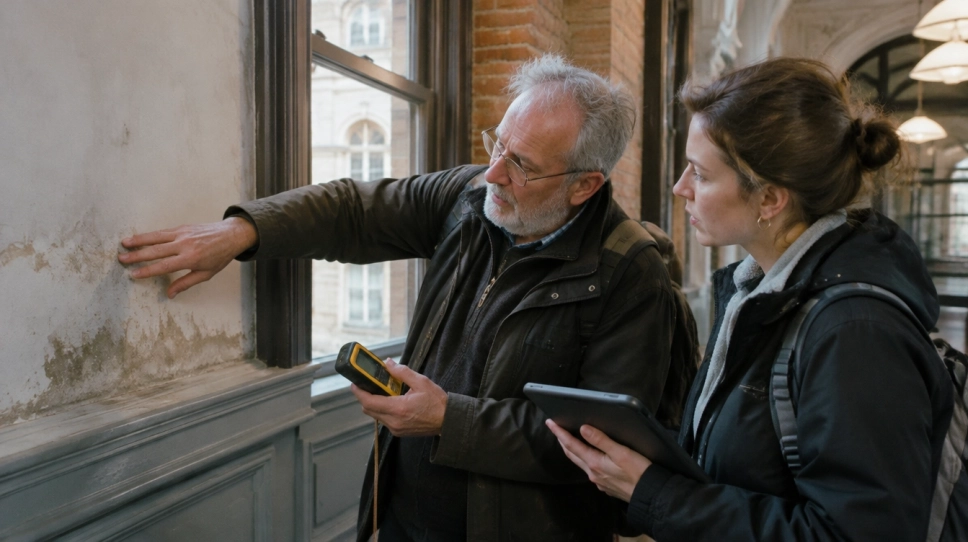
A firm can be sold. Knowledge can’t, unless someone sets out to capture it.
Every senior surveyor carries decades of pattern recognition. They know the roof that looks fine but isn’t. They know which clause in a lease will cause trouble years later, and which client always rings late on a Friday. It’s the hardest thing to replace and the easiest to lose.
There’s a lot of good work going on here. Many surveyors in The Surveying Room have put themselves forward as APC mentors. Experienced professionals are turning what they know into CPD courses, webinars and guides.
The change I’d like to see is simple. Knowledge transfer shouldn’t wait for the final months before someone retires. It should be part of how a firm runs, every year, from the day someone becomes senior enough to have something worth passing on.
Can you step down without stepping out?
This is the route I hear about most. People aren’t ready to stop. They just want to stop running everything.
Going part-time, consulting or freelancing for other firms can keep good surveyors in the profession for years longer. Firms short of capacity need exactly those people. It also keeps hard-won judgement where it’s useful.
It does need thinking through:
- PI cover: whose policy are you working under? Professional indemnity insurance works on a claims-made basis, so if you close your own practice you still need run-off cover for work you have already done.
- Report sign-off: who carries the risk?
- Brand: if you work under someone else’s name, what does that mean for your clients?
Plan it as carefully as you would a sale. Done well, it’s one of the best outcomes for everyone involved.

How can AI help get your surveying firm in order?
This is my patch, so I’ll keep it practical.
AI won’t value your business. That’s a job for a qualified adviser. What it can do is help you build a better business, one that’s worth more, runs more smoothly and is easier to hand on.
A better business is worth more to a buyer, a successor or you. AI can help in several ways:
- Making the firm more efficient. Look at where time goes on bookings, admin, chasing and report preparation, and use AI to cut the repetitive work. Time saved there goes back into fee-earning work.
- Improving margins. Find which jobs, clients and services make money and which lose it without anyone noticing. Then price and plan accordingly.
- Tightening processes. Record yourself talking through how you handle a job, a tricky client or a type of instruction. Let AI turn the transcript into a first draft of a procedure, then edit it. What lives in your head becomes something someone else can follow.
- Seeing your income clearly. Work out which fees recur, which clients belong to the firm and which belong to you personally, and where the firm leans too heavily on one person. A buyer will ask all of this.
- Tidying your data. Clean up client lists, contact records and old files so the value in them can actually be passed on.
- Drafting an information pack. Produce the first version of a pack about your firm, ready for an adviser or a successor.
A word of caution. Be careful what client information you put into any AI tool, and check everything it produces. It speeds up the work. The judgement stays with you.
The irony isn’t lost on me. The technology many surveyors are wary of may turn out to be one of the best ways to make sure their life’s work outlasts them.

Questions worth asking yourself
- If you stopped tomorrow, what would happen to your clients?
- How much of your firm’s value depends on you personally?
- Have you set a date, even a rough one?
- Who should be learning from you now?
- If you went part-time, who would you want to work with?
You don’t need all the answers this week. You do need to start asking the questions.
Leaving well
Surveyors spend their careers telling clients what’s hidden behind the plaster. In my view, the profession’s biggest hidden defect is how its people leave it.
Leaving well takes planning. The firms and surveyors who do it will hand on something of real value. The ones who don’t will find out too late what it was worth.
This is why we’re building Succession UK, launching in 2027.
In the meantime, firm membership is where firms build value through visibility, work, people and know-how.
Until next week 🙂

Nina Young
Founder & CEO, Surveyors UK