The Residential Surveyor Is Dead. Long Live the Residential Surveyor. Part 1

This is Surveying

Surveyors UK
- Business Development & Marketing
- Careers, Jobs & CPD
- Property/Built Environment
- Residential & Housing
- Risk, Legal & Insurance
- Technology & AI
This episode is sponsored by Rebuild Cost UK, specialists in reinstatement cost assessments for RICS-compliant reporting. Find out more at https://rebuildcost.uk/
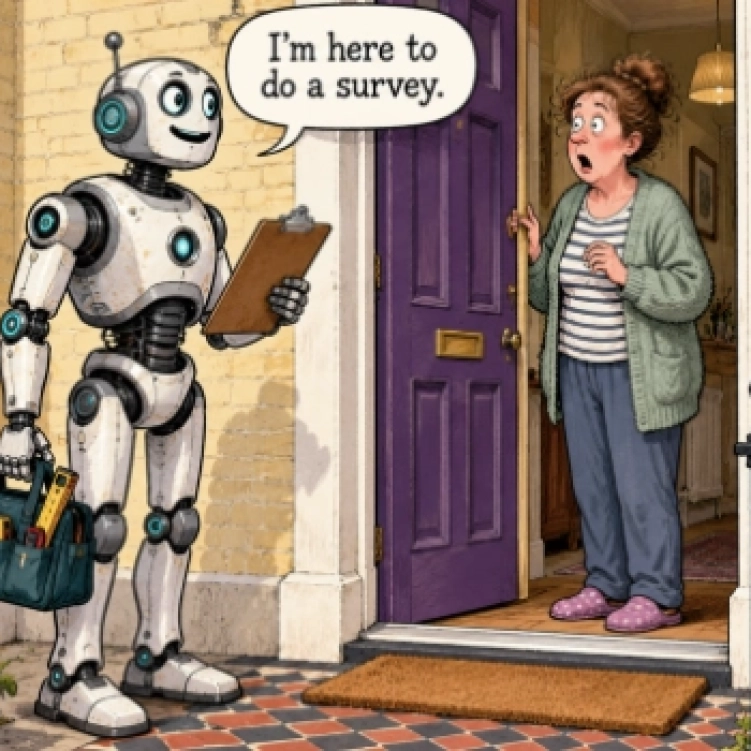
What happens when we stop asking how AI can make surveying quicker and start asking whether residential surveying needs to be reinvented altogether?
Other podcast episodes you might be interested in
AI and tech
- A Deep Dive into Surveying’s Future: Al, PropTech, and Beyond with Richard Sexton. Richard Sexton on AI and PropTech in residential work.
- AI, Surveying, and the New RICS Standard with Christopher De Gruben. Christopher De Gruben on the RICS AI standard.
- Can AI Replace a Chartered Surveyor? A Professor Answers Honestly. A professor on whether AI can replace a surveyor.
Residential surveying
- The Residential Surveyor Is Dead. Long Live the Residential Surveyor. Part 2. Part 2 continues the conversation with Jony Milner.
- Why Residential Surveying Carries the Highest Duty of Care. Richard Ballam on the duty of care in home surveys.
Related reading: Why AI Does Not Need to Look Like a Surveyor; New national surveying brand Westmarq launches in the UK; The infighting is costing surveying the next generation.
Nina Young talks to chartered surveyor and Legal & General Surveying Services technical manager Jony Milner about AI, the future of residential surveying, professional bodies, and industry culture.
In Part 1, the conversation focuses on the future of residential surveying and what AI could mean for the profession. Is the residential surveyor really dying? Could AI eventually become better than the human surveyor? And could a typical three-bedroom semi eventually survey itself?
Nina and Jony also explore whether the traditional survey report needs to be rethought, whether property surveys could become living digital records, whether surveyors could become the human interface for AI, and what surveying can learn from other industries.
What We Cover
- Meet Jony Milner and his route into surveying
- Why surveying needs more voices
- From aspiring film director to residential surveyor
- Is the residential surveyor really dying?
- AI, productivity and the future of surveying
- Could seller surveys help tackle the skills shortage?
- Why the survey report may need to change
- Could property surveys become living digital records?
- Will surveyors become the human interface for AI?
- Who takes responsibility when AI does the work?
- Could AI become better than the human surveyor?
- Could a house eventually survey itself?
What surveying can learn from other industries
This is Part 1 of a two-part conversation. Stay tuned for Part 2, where Nina and Jony explore toxic culture, social media, professional bodies, collaboration, competency, chartered status and the future of the profession.
Guest Links
Jony Milner
Legal & General Surveying Services
Useful Links
Guest Bio Jony Milner is a chartered surveyor, residential surveyor and valuer, and technical manager at Legal & General Surveying Services. He has worked in and around surveying for nearly 30 years, with experience across corporate surveying, private practice, local authorities and panel management. His career spans residential surveying and valuation, building surveying, retrofit work, risk management and professional standards. Jony is particularly interested in how the profession can adapt to technological change, improve collaboration, and think differently about the future of surveying.
This episode is sponsored by Rebuild Cost UK, a pay-as-you-go rebuild cost calculator built for residential surveyors. No subscriptions, no annual contracts, you only pay when you run a calculation. Try your very first calculation free at rebuildcost.uk.
If you want to connect with surveyors across the UK and keep up with the profession, join The Surveying Room. It is free to join and open to all types of surveyors, students, and professionals who work with them. Surveyors UK & The Surveying Room
Connect with me – Nina Young on LinkedIn
Transcript
Nina: 00:08
Hello and welcome. You’re listening to This Is Surveying, the podcast shining a light on the people, ideas, and stories shaping this incredible profession. I’m Nina Young, founder of Surveyors UK and the Surveying Room, the community bringing surveyors together, breaking down silos, and making surveying visible. So for now, let’s dive into our latest episode. Hello everybody, and welcome to This Is Surveying. Today’s guest is Johnny Milner. Welcome, Johnny. I’m very pleased to have you on here today. Before I introduce you fully, I just want to say I don’t think I’ve ever had such an amazing list of topics to talk about. And the topics are so good, and we want to cover them all, that we will be running this over two editions week after week, because I think there’s a lot of things, a lot of people are going to want to hear from this one. So introducing Johnny. Johnny is a residential surveyor, he is and valuer, and also a chartered surveyor. And he is a technical manager for legal and general surveying services. So now I’ve built you up with this amazing
Nina: 01:20
list of topics, Johnny. Welcome. And I oh I always uh we always start with if you want to tell us a bit about yourself. Obviously, not War and Peace.
Johnny: 01:32
Um thanks, Nina. I think you’ve told what needs to be said. Yeah. Uh child surveyor 20 odd years, I’d suppose, been in the business probably nearer 30. Yeah, I think War and Peace would go back to day doc degree from Sheffield Halland, worked for corporate uh private practice, local authorities. Uh during the global financial crash, I did four years at a local authority looking at uh what we now call retrofit, so improvements to properties. So that was a kind of get a job after redundancy, and it ended up being actually quite a learning curve and something that came back to be a benefit sort of 10-15 years later. Had a great time there learning that. Um back into corporate residential surveying, left uh corporate to go and work for a one-person firm who was a chartered building surveyor. I was used to doing level twos and valuations. Uh, something you see quite a bit in this industry is building surveyors not wanting to do valuations, and valuation surveyors not wanting to do building surveys. So I wanted to learn how to do more in-depth surveys. So I went to work for them to learn more about that, and then obviously I did the valuations for them. So we took on a graduate train them up uh as well. Then I went back into the corporate world for another spell. Then COVID hit, which was an interesting time managing that. Then left them. I ended up working for a what I’d say is a uh a panel management company in the moving portal. So from introducers to surveying businesses, uh, ran a small team of surveyors for them and did risk management on the panel side. Then I’ve just recently, last year, come to work for Legal and General Surveying Services, which was uh almost going back into a more structured, bigger firm, working on the risk management side, professional standards, looking at the full gamut of supporting surveyors in doing their job and looking after the issues when there’s queries, complaints,
Johnny: 03:45
that side of it come in. So helping to evolve.
Nina: 03:49
Yeah, absolutely. Because yeah, and I’ve seen some of your sessions as well, which are great. You’ve been bringing in experts from across the profession to do hourly sessions. I think those have been really good. Well received from what I’ve seen.
Johnny: 04:01
We do roughly every week. Uh, we have to have a break every so often as everybody has to have a holiday at some point. Uh, but we do sort of learn in 45 sessions where we over teams we bring in guests presenters, and I want to see what I wanted to do is not just do the meat and potatoes kind of CPD for surveyors on damp and roof structures and that side because we’ve we’ve had that um quite a lot. I want to just maybe broaden the horizons a little bit on what is coming along the line, make us better informed as soon as sooner rather than later, and also give the people that are guests on these an opportunity in a platform to present their their thoughts and ideas. I want to bring help bring through more voices in the surveying world because I think that we don’t want it all concentrated on what on a few opinions, we need to look at everybody’s opinion. And I I get with surveyors and I’ll have a coffee or a pint with them, and they will be great at what they know, relaying that information, and they’ve got opinions and thoughts and see it from different perspectives. I think that collaboration is a big thing in in everything that we we need to do going forward, and I think that you need to get that out with your surveyors in bringing them to the table and giving them a chance to present their opinions. So it’s just yeah, get a few more people, a few more voices out there. Hopefully, we can all learn.
Nina: 05:28
Yeah, and I think that that whole thing about voices and representation across surveying and things is something we’re definitely going to be exploring looking
Nina: 05:35
at this list of topics that I have in front of me. Just one thing I cannot recall if you’ve told me this before when we’ve had conversations, but did you plan to be a surveyor?
Johnny: 05:46
No.
Nina: 05:47
No, like most.
Johnny: 05:50
No, not at all. Uh I don’t come from a background of many generations of surveyors, in fact, none at all. First person in my family to go to university. So it was a bit of, you know, getting out of the small town to learn something new. I was in the hospitality at the time, met some surveyors who came to the place where I worked, uh an events arena. They were looking around the doing an asset valuation as such for the local authority who were who had a stake in the arena at the time. Talked to them for a while, realized they were only wearing nice suits and drove nice cars. So I thought that might be all right. I went home and saw that in the newspaper, Sheffield Hallam University were advertising some property degrees courses. So I went and had a chat with them and ended up uh signing up for it. They did say you could do the degree or you can do the HND. To me, uh, people who went to university were above that they were smart on and they lived like in the young ones kind of situation. Uh, I didn’t think I was smart enough and I didn’t want to live like the young ones. Uh, so I did the HND and then went on to do the degree after that. That but no, I wanted to be a film director originally uh when I was a youngster. So completely different to surveying.
Nina: 07:05
Yeah, completely different. And it it never ceases to amaze me, the backgrounds that surveyors have either come from or how they fell into it. And the ones that tend to have chosen it or it’s been much more like a straightforward path are those where the family is in it. Whereas nine times out of ten, it’s just it’s just accidental almost. Okay, so this uh topics list.
Nina: 07:31
I think um one of the things, and I’m gonna just read out this because I thought this was an absolute brilliant line. One of the first subjects uh to talk about is the residential surveyor is dead. Long live the residential surveyor. Now, tell me about this one, Johnny. I thought that’s just what a line that is.
Johnny: 07:54
Yeah, well, I think that what it is is there’s there’s a lot of conversations of what does the future hold for the residential surveyor going forward? Are computers going to take over the job? They see AI as a as a job killer, uh, or they see it as an aid for us doing our job and are we gonna get better at that? I think it has a great opportunity to potentially do both in that way, as long as depending on as a residential surveyor, are you able to adapt? Are you able to pivot in certain ways? Going on from that sort of headline, it was why I think that there’s two different types of evolutions going on at the moment, and why I think they’ll almost cancel each other out in maybe giving a lifeline to surveyors, in that I think that at the moment we’re looking at AI as doing what we’ve always done, but with an AI wrapper on it. We’re looking at it from purely a self-serving, self-supporting kind of way, in that will it let us continue to do what we’ve always done? Will it take those little pain points out of it? But we’re still gonna be producing the same product coming out the other end that will look generally no different to the customer than what we’re already doing. I don’t seem to be seeing that there’s an evolution in the report format that we give out to the customers, but it still looks like it’s gonna be a paper, photograph, text-based document. And I think at the moment, a lot of the platforms which seem to be multiplying. I think every other day somebody’s developing a new AI platform for surveillance. Is helping us on site be more productive, as in taking photographs and it putting text in and moving the text boxes around so it’s easier to use and that we’ll be able to produce reports in in quicker time, faster turnaround on reports. But it’s still doing the same thing that we’re we’ve always done. And I think that that is the shorter term bit. At the same time as that, we’ve also got the seller’s survey coming along as the other part. Now, if that does happen, then you’ve got a multiplier of we’re going from roughly there’s different figures about but a third of people have a survey done on a property that they’re purchasing. We’re gonna be going to having a hundred percent, if it’s mandated, of properties that come onto the market. So you’ve got to look at even conservative, is that you’ve got to have three times the amount of surveyors or who it may be doing that. We’ve already got a skills shortage. So the only way to do that would be to increase the amount of work, amount of capacity in the market, which means that you’re gonna get people in quick, which means that you’re not gonna get experienced people coming into it. You’re gonna then there’s a standards issue. But if the AI is making us more productive, then we narrow that gap in that the experienced surveyors will be able to do more in theory. So that’s probably better for the customer in that if AI the AIs come along at this right time at the same time as seller surveys, in that you will get uh you’ll up production and you’ll you’ll keep quality in that way. There is still a gap, I feel.
Nina: 11:09
I think so. Because it’s the demand, isn’t it? It’s huge if it does come into play. But you’re right, about the you know, I’d have to agree around all the AI is currently the the focus is on how do I make my current role, whatever I do, quicker. Whereas I think I encourage people to stand back and look at this from a bigger, a bigger position because unlike other technologies such as drones or you know, iPads or anything anything like that, I’m just thinking around residential at the moment. That’s narrow tech, it’s the firms adopting it. AI is for everybody, everybody’s got it. Um, and it’s largely free. So you chat GPT’s biggest users, people don’t pay for it. Billions of people every week use it, and that’s only going to increase. And so I think it’s looking at this as a bigger thing because I when someone’s got that kind of power and knowledge and information in their pockets, they can question everything far more. And we’re we’re starting to see this in complaints, claims with insurers, not surveying so much yet, but other professions. And it’s like it seeing it as a narrow thing to speed things up, I think it it’s reshaping everything around because I think it will be the clients that will demand, they will see a PDF as old school, you know. It’s like, why can’t we have this electronically online, interactive? I think, I think it’s, you know, the buy behaviors and we sell a surveys, it has to be cheap and fast. And I think AI will speed it up. But you’re right that I don’t think there’s enough to fill the gap.
Johnny: 12:40
I think there’s a missed opportunity as well, thinking that what we’re we’re seeing it from a self-serving point of view of that, but it’s but from a customer’s perspective is what are they getting? I mean, like I say, we
Johnny: 12:50
we have this PDF report. I see that the potential that could save surveyors in in the longer term is that we produce something that’s more dynamic and these kept on a cloud, and actually the survey becomes a living program, a living record of your property. We already we measure properties for the reinstatement. If we’re doing evaluation, we measure it, so we’ve got it for comparing. We take measurements of properties that we then don’t really use. And if we’re collecting that data point, and if we collect maybe a few more data points, then we could provide, especially if we’re feeding stuff like BIM and CAD kind of modeling, is that can we produce a document of the property in its state as it is when you buy it? And then the customer can use that if they then decide they’re going to get an extension. Then an architect or a structural engineer could then use that survey document to then do their calcs off of it, given that if with AI, you can you can take a scan of a room and then you can measure the different points after you’ve you’ve been in the property. Or we do we become, I don’t think surveyors would like they’d call this, but more data collectors than in the what we actually do. And because we do that is what we do on site, that is the the you know, the data capture, the data collection, the the survey as such, that’s what we’re doing. We’re then forming our opinion from that data to then report.
Nina: 14:19
I think you’re right about the whole capturing that data is AI’s food. If you haven’t got the data, it’s not captured, you know, AI is useless. And good examples of that are in legal where you’ve still got firms, legal, you know, legal firms, where a lot of old documents, whatever they are, contracts are everything, are all in this literally in paper cabinets, old leases and things, then they’re not online. AI can’t do anything with it. But if you can imagine the power of every single residential surveyor, did all captured all the data, clean quality data, more data points, it was online. The ideal scenario, which I can’t see happening for for obvious reasons, is that if that was all put together and it was just linked to the property, not to the firm, you would have so much powerful information and history for property over years. Because it’s strange, it’s like it goes in little little points in time, isn’t it? And then it’s like a PDF or a Word document, and then it’s lost. There’s no ongoing record that can track that property over time when surveyors go in.
Johnny: 15:20
And if it is a a diamond dynamic evolving document, then you you can use it that way. We can, you know, trades could use it as a to work off uh their plan. So that’s how I see that we could evolve what we’re doing, because at the moment it looks like we’re just doing what we’ve always done. I see it that the AI interest is in in making us more productive because I see that as a shorter term thing, and with the sellers’ survey coming along, there’s got to be capacity to do that. The next probably evolution of AI that I’d see is people who were using like metaglasses or similar, and they’re going around and then recording it, and it would almost be they have they have a bench, they have a benchmark of what AI knows about properties. The surveyor, the human, he becomes almost the mobility for taking AI around a property. I mean, I’ve I’ve been bullish about robots becoming surveyors before, and it is I’ve probably been kicked a few times about that. But in effect, do we become the drone for taking AI around, getting into root spaces, recording that on glass with recording function on say metaglasses, that feeding into an AI because it’s got it can see the image and relate that to a text and do it that way. And then is the next part of that is that if the AI is doing that and it’s been verified and it’s been over over a period of time, what is the need for a qualified person if the AI is the qualified entity? If that if that’s the sign-off, isn’t it?
Nina: 16:56
It’s the judgment and the sign-off at the end. So someone has to be because the AI can’t be accountable. You can’t claim AI.
Johnny: 17:02
On the AI standard, yeah. I mean, you’ll be looking at is that we’re responsible for what for the output of that. So I would see it that it would be verified in that the the person going round being the drone as such would be a surveyor with the tech doing the recording and the reporting and the verification. But then as that verification becomes almost the cross-check between what the AI is saying and what is needed to be verified, and when it gets to a point where the verification is not needed as much, does the AI become the expert? Just like as as AVMs is that you know, sense check AVMs, brought in slowly, once you filter your data out, you see where the pain points are, and then you have confidence. How confident are you? You would have assisted surveys.
Nina: 17:52
Yeah, because you’re right, yeah, that’s so true. Because the the only re reason it’s stopping at the moment is the well, the sophistication at the moment. And but as we know, with the AI and image capture and identifying defects, that will get better, but it we desperately need data. So we need millions and millions of images of defects, so then they can understand what is a crack and what isn’t. But I think that idea of the surveyor being like almost driving you know the drone going around the property, and the surveyor will know where to look or to make sure, or it’s not taking away them almost doing the inspection, but they are looking. And it’s like when drone operators, the good drone operators that do drone surveys, have always said you need to know what you’re looking at or what you should be looking for. You can’t just put the drone up and take loads of nice fancy pictures because it just doesn’t work. So I think that makes a lot of sense. But I think over time there needs to be a shift in how that data is captured and a consistent way of capturing that data. So if it’s to become across the board, then once you’ve got that data, then you train the models and then you’ve it’s extremely powerful. But the robots are an interesting one because I’ve had so many surveyors go, Well, I can’t see a surveyor going up a into a loft anytime soon. And my mind’s that I don’t really say much about it, but I think we will get to a stage one day, who knows when that will be, when if you can get a robot to go around a property, then why wouldn’t you? It’s like but it’s far miles away, and it’s like who’s responsible still at the end?
Johnny: 19:22
It is, and because you need that sign-off, you need that qualified opinion, you need those letters and that that number uh for risk management and for anybody then further up the chain looking at has this been, you know, what is what is the confidence in that figure or what is the confidence in that that reporting. I think mentioning with the drones, and you’ve you’ve got to know what you’re looking at, is that if it collects the data on that and you cross-reference that then that say you look at a hundred roofs and you spot these different problems, you feed that into AI, that AI will then start to learn that. And once you get to the point where you’ve done thousands and it’s and it and the percentage of where it’s wrong is into the single digits, the confidence on reporting will be more in bed in favour of AI than not.
Nina: 20:13
That’s very true. And it’s one of the things I’ve seen. There was a study and work that was done, I think I don’t know if it was Sweden, where it was to do with using AI to detect it was actually breast cancer, and it was basically it they’re using it now regularly for the imagery, and it’s spotting 30% more cases than people do, and humans do. And we’ve seen it like with MRI scans. The consultant is always at the end to review, but the AI is detecting things, and like you say, doesn’t get tired, doesn’t get hungry. There is this always this presumption that the human is the perfect one, and it’s because it’s threatening our own identity as a as a species, I guess. You know, you can understand it, but at the same time, there’s been many, many cases across different professions where it’s more accurate. As long as you’ve got the right data and it’s trained correctly, it will be more accurate because it will be able to identify things that the human eye, for whatever reason, doesn’t.
Johnny: 21:15
Yeah. And I think um Sam Altman came out uh yesterday or day before and said we’re a couple of years away from is it agentic intelligence that will that’s good that’s going to make the current AI look like a small child. So yeah, if we’re heading that way, then it’d be very interesting how now we adapt and use it. Yeah, yeah.
Nina: 21:36
Yeah, that is, I mean, agents is the big thing now, and this is what people are starting to use. Only about one percent of the latest stats people in the world use agents. I’ve I’ve started to use them and try them out. I wouldn’t let them fall loose on my bank account or anything or anything online. Fine, nothing sensitive data, absolutely not. But that’s incredible, and that’s where literally you’re not because everybody at the moment’s still using the chatbots and Go and I draft this or draft this is like you give it the outcomes you want and it goes off and it does it all. So I have it connected to all sorts of things at the moment and it’ll go off and do it all for me. But then the AGI artificial general intelligence is yeah, I think they’re now saying the timelines are longer, they all disagree on it, but it’s becoming shorter as they they’re just the improvements are increasing.
Johnny: 22:23
Yeah, I mean it’s like using the novelty, isn’t it? Using uh like uh you go on Facebook and people will do these, make a caricature of me. And it’s it’s loading up the the background, is that is taking your your photographs and learning from them. And it’s it’s the novelty of using chat GPT now is I I’m I’m using Chat GPT more to do what I used to use Google for for searching, because it will give me more of the background and the context, and it also it remembers that I’m a surveyor uh as well, so it remembers my past inputs and and puts it into that context as well, which if I’m using it outside of that context, it is a pain because I have to say, you know, I don’t want this for doing that because I’m I’m not just a surveyor in in the world, um, but it puts it into that, so it’s it’s learning all the time, isn’t it? And I think that bringing it back to surveying is that there’s vanilla properties and vanilla, you know, which is your three-bedroom, three-bedroom semi as such, is will it get to the point where there’s confidence in doing a survey by an agent on vanilla, a vanilla survey, just as we have vanilla valuations, is that the confidence in doing vanilla work is that the data is there. And will it be then for surveys? Not on your listed buildings, not on your weavers’ cottages and stuff like that, but three bedroom semis on an estate all built about the same time where there is other data that it’s already got that we did a survey on this one, that one, that one. So you can already pull that location information, mining area, radon area. It knows that. But how much will it have learned about the subjective property is that to repeat that that data that it’s got?
Nina: 24:07
The difficulty is that we don’t have access to all the surveys that have ever been done, so it can’t has can’t be trained. And I know some some bigger firms are trying to do this because they’ve they’ve got a lot of data, and obviously they can, but it’s still it can be regional. I mean, we we know that are certain things that only appear in certain regions, certain issues or challenges, defects, even. But yeah, I think it’s it’s gonna evolve quite quickly. But I don’t know if about you, but I’ve noticed sort of a a big sort of more interest in AI and an awareness of it generally, day to day in your lives. Like every everything you look at now it’s just got AI stamped on it. It’s just it’s this is just really where it took off. 2025 did a more, but 2026 is where I think surveyors are starting more to take note of it, trying it out. But there’s a lot of misunderstanding, that’s the problem. There’s so much misunderstanding as to not using the free models. I had some surveyors say, I’m not paying for it. And I’m like, you do realize that you cannot put anything in there.
Johnny: 25:10
If it’s free, then you’re the you’re you’re the product, aren’t you? Kind of thinking it is that’s the idea.
Nina: 25:16
That’s the idea. And going back to your really good point about using using the like chat GPT to to search, which is which is a huge part of what people do use them for now, is that the results, this all goes comes back to generative engine optimization and the AI overviews that Google now has. Google’s ruled out Gemini, which is sits in now the top of Google, and what it does is it will pull through, or ChatGPT pulls through what it considers credible sources. And it’s not just when you go to Google, what do you get? You get ads all at the top. Now that is probably going to change. Chat GPT’s talked about ads, but generally you’re getting actual relevant results, not just who’s paid to be at the top of a page. And I think that’s another you get much I I I do like the results, but then those results are based on certain things which aren’t always reliable. No, anyway, it’s just it’s just like anything. Be be be aware, be you know, don’t believe everything and and question everything, but that that shouldn’t they get using it?
Johnny: 26:18
No. I I but I think I think that there’s also possibly a another endpoint for surveyors in that we AI is moving at great pace and doing some wonderful things in in the outer world, but we don’t seem to be looking at how that could impact surveying
Johnny: 26:35
in that what does the customer want? Is it the time to reinvent surveying completely? I I mean we’ve discussed before about you know why can a house not survey itself? You know, uh a moisture resistance meter is is just saying how quick it takes to travel from one prong to another. Is that any different than one plug suit plug socket to another in and putting a uh some kind of diagnostic in there that reads how sending a pulse from one to the other, how long does that take? And if it increases, is it because there’s moisture in there? So the house in effect becomes a damp meter. You know, we have sensors that can do thermal imaging. In in your alarm sensors, you could have cameras, thermal imaging, you could have sensors for vibration, noise. So, you know, sense of smell, I’ve not quite got my head around because when you walk into a property, you use all your sensors as a surveyor, and you know, damp is a big thing, isn’t it? And more people walking, I can smell the damp. Yeah, so I don’t know how they would get around that, but I’m pretty sure there will be some perfumery that is working on some AI smell type device to do that. But I think that is the possibility that a house could survey itself and you could get real-time data on a dashboard as a buyer, and that gets transferred to your access when you buy the property, and you could you could have an update. It’s not a the surveyor came six months ago, they they did the survey six months ago, and now we’ve bought it, and now we’re moving into it. So things can change in six months, weather can change in six months.
Nina: 28:14
So I think it’s a really good point that constant monitoring. And I think there’s been some things, quite a few things happening across housing disrepair and you know, that that area, because I can see the benefits of a lot of, you know, we’ve got tenants and access to properties and the cost of that, especially for for the local councils. I think there’s there’s a lot that has been driven there because of the cost savings and the time and you know, difficulties with tenants access and things like that. Um, what’s good though is is is like what you’re doing is that these these are ideas, you know, everyone is thinking about, well, not everyone, but a lot of people think about, well, where is this going? Nobody has all the answers. But the important thing is that you you keep an open mindset because the thing I fear is that there’s this blink of view, it’s just gonna things will just be the way they are, and we’ve just got this tool that’s gonna change things. That is not the case with AI. We’ve never had such such a technology ever in our lifetime. That’s been available to everybody and is impacting all areas of work, society. And you’re right about what do the clients want? They’re gonna want different then their expectations are gonna go up. I think they’re gonna accept more because they’ve suddenly armed with something, they can ask everything they want about what is a residential survey and get answers back, whether rightly or wrongly, relevant to them and their situation. And they’re gonna go, well, do I need one? I think I’ve tried it out. Some some do say yes, recommend you get one, which is great, but then who do you get? And then there’s there’s all that other sort of side of it.
Johnny: 29:47
I mean, when you when you put take your car in for a service, it’s been around for a few years now. I get a a link to a video of the mechanic going around my car and talking to me and saying, you know, this is you know, that there’s a bit of corrosion here, or this is okay, this is up to standards, you know, but you need to keep your eye on this. That’s from me putting my car in for a service, and it’s been around for years, but surveys are a piece of paper with some text and a photograph, maybe annotated, but uh that is what is going on in other industries, and I think that that’s what we need to look at is how can we how can we take the best bits from other industries to give the customer something that is different, and maybe there is novelty value in that you know surveyors will probably say, Yeah, well, you’re telling them the same thing, but you’re just telling them in a different manner, so it’s all it’s it’s a bit faffy, isn’t it? It’s just showy. But novelty gets people on board as well.
Nina: 30:45
So it does. It does, it does indeed.
Johnny: 30:49
But that’s that’s where I think it’s a bit of a missed opportunity, is that we we we should evolve beyond the document that we produce at the moment.
Nina: 30:57
Yeah, because when you really look at it, when you think of other things that you’re seeing across other innovations, other technologies, other solutions, even sort of professions, so in like conveyancing and legal and finance and the things that are coming out, they’re looking to really turn things on its head, literally. But the outcome and what it’s about, what the you know, what does the client need at the end of the day? What is it they want? Well, they want to know is there anything wrong, anything they should be worried about? You know, do they should they buy this property? End of how that gets to them.
Johnny: 31:28
How they consume it as well. I mean, we we we consume as films on Netflix now, don’t we? I mean, compared to how we used to do. Um so it’s it’s getting with the modern age in that way.
Nina: 31:41
So, why AI is the reckoning was your next topic. Do you think we’ve kind of gone over that?
Johnny: 31:47
Yeah. So, like I said, I said, uh the reckoning and missed opportunity is that I think that it’s the reckon it’s the time of reckoning, is that we need to look at what we do as an industry and see how we can can evolve that rather than just doing what we’ve always you do what you’ve always done, you’ll get what you’ve always got situation. Um and I think that people will start to see it as not being with the times, not being an antiquated product.
Nina: 32:19
Yeah, I think I think you could be right there. This one jumps, so we got another one, but I think we should cover it because I like this one.
Nina: 32:27
Trust and Google reviews are rubbish, basically. That’s what you were you think. So tell me tell me about this, because I’m interested in really interested in this one.
Johnny: 32:36
I I know I know that I’ve mentioned this before to you, and you is kind of uh you you you gave a look like right, okay. Uh it’s not that the review the reviews are rubbish, it’s that at the at the point in time where they are about is that you have told your your customer as a survey, you’ve told them what they’re gonna get. Some an animal that they’ve probably never seen before, or it will have been a few years ago. You’ve told them the time frame you’re gonna do it in, you’ve told them the price you’re gonna do it for, you’ve dictated those points. You then produce a report for them, and you could have confirmed their emotion by saying this property, you know, it’s fine, and they they want to buy they want to buy it. End of that, you could have given them the get out of jail kind of thing of this property’s got some serious problems and you need to negotiate. But to me, it’s a little bit like why don’t we a bit like being in a restaurant and being asked to give a review after you’ve had the starter? You saw on the menu if you went to a restaurant where you where you see where they put pictures of food on. Uh we’ve all been to one, I’m sure. You see, you see what they delivered what they look like at the price they said it was gonna be, and they did it, you know, your food would be within 10 minutes, they did it in that. What the next morning you’ve got food poisoning, your review’s gonna be different than if you’d reviewed it after you’d eaten your meal. So I’m going off on a tangent now.
Nina: 34:02
I like that analogy. That’s a good one. I’m gonna I’m gonna use that for something.
Johnny: 34:06
It’s a good point. But you if you how many firms go to a customer and six months after the survey and say, We did you a survey, did it do for you do what you wanted it to do? Did it assist you in this transaction? You’ll probably get the emotion of the the stress of buying a property will be taken out of it. They’ll be able to reflect on it. You probably get better feedback on what you reported, and they could say, Well, yeah, you told me about this, this, and this, but when we moved in, we found that. So there’s a learning curve in in that for surveyors. You probably you’re gonna build a better relationship with that customer. And I know that transactions happen so infrequently for an individual, but would there be more chances that they’ll come back to you because six months after the fact you you you care about that transa what that job that you did, I would say so. To me, they they come at the wrong point. In the you’ve only had half the surface, you’ve not you’ve not seen whether the surveyor’s competent.
Nina: 35:01
That’s a good point. They’ve not so because they’ve not actually able to compare the report to actually what the property is.
Johnny: 35:07
They’ve not that it’s like reading a uh a review with like Jeremy Clarkson, you know, saying basically, um, I’ve reviewed this car, but I went to the showroom, I opened the doors, I sat in it, I didn’t actually drive it. So it’s it it’s half a review.
Nina: 35:21
No, I actually agree with that. That makes now you’ve explained it, yeah, I completely agree as to why it’s I think it’s how these reviews are used because going back to AI, AI does look for reviews, you know, signs of independent review, this kind of thing, like Google Reviews, as part of how it then will pull up surveyors it recommends in the AI chatbots. So if you’ve got loads of good reviews, you’re ranking good, it sees that as credible credibility. So in that sense, it helps, but actually as a full review of the surveyor’s work, it’s not. So that’s a really good point.
Johnny: 36:03
I don’t think that that they can tell you that the surveyor delivered what they you thought you were gonna get or they told you you were gonna get. They within the time frame and for the price that you said you would. That’s what the reviews do to me. They don’t tell me whether you’re competent. And I think competency is one of these things, a bit little bit like sense of humour and generosity. I think it’s what other people should say about you, not people saying I’m a competent surveyor. I think that you know it’s for other people to make that judgment. And whilst you’re competent for that customer on that property, change that customer for a different one, you may not be competent for that customer on that property, or the same customer on a different property, you may not be competent. It’s I think it’s for your customers to say you’re competent because everybody says they’ve got a sense of humour. Everybody says they’re generous. Everybody will say that they’re a competent surveyor. It’s clearly not the case, is it?
Nina: 36:53
Is that because you could have a fully competent surveyor, but then they’re thrown onto a property that’s left field for them or not typical, don’t have the expertise in it, and they’re at the depth, but they’d still do it.
Johnny: 37:04
So if your review is on your competency, you knew is the best surveyor for you. I I don’t think Google reviews or trust pilot ones give the full picture. If if you can adapt that by, like I say, six months later, getting in touch with the customers, giving up a follow-up.
Nina: 37:20
I wonder how many. But there’s barely none. Barely any.
Johnny: 37:23
I I would say so.
Nina: 37:25
No, I have to agree with with where you’re coming from on that. I’ve always said group reviews are a good thing, but I’m coming at this from obviously probably a lot, a lot from the marketing side, you know, and uh transparency, and it it will benefit firms with AI as well. It’s as well because it seems a trust signal. But I agree it’s not it isn’t a full like review of actually their service because you’re right, they won’t have had chance to actually sense check that.
Johnny: 37:55
I I agree, I think for for AI, that’s the thing, is that it’s gonna it’s gonna help you with that because it will pull that data, but the data is only it is on a limited actual valid points.
Nina: 38:11
Yeah. Okay, you’ve convinced me on that one.
Nina: 38:14
So the next one is around what you think of the RPSA, so that’s the Residential Property Surveyors Association, and CABE, the Chartered Association of Building Engineers, Residential Surveyor Section. You sort of expand on that because I wasn’t sure.
Johnny: 38:33
Yeah. I’m I’m a member of of both those organizations as well. So I’m talking uh as a member as well, I guess. CABES residential surveyor section was formed, I think maybe a year, maybe 18 months ago, as a way of bringing residential into CABE’s fold and making it, I say, as a as a competitor in a way to the RICS in that way, giving them a chartered ship. I think that the formation of that, I mean, I asked when this was there was a talk of Cabe taking over RPSA. I think it was originally kind of built as that then became this residential sector. So merger, that’s the right word, yeah. And I’m um being a member of CAB, I would have voted against that. I asked, I asked for if if if it was going to be subject to a vote, uh, that didn’t happen, but then it didn’t end up being a merger. As a CABE member, I would have voted against for against that. I would as a member of RPSA, I would have voted for it. So I can see the benefit of RSA members gaining access to something that would give them a chartered designation. I think maybe a chartered building engineer turning up to your house is sounds a bit more severe and might scare some people compared to a chartered surveyor. Sounds a bit more, yeah, it sounds a bit more subsidency, doesn’t it? As you say. Um I think CABE is a good organization. I think that they’ve got the right framework. Um, I think that if you were to be going CABE and you think that Rick’s going to be a competitor to our ICS in the marketplace, I think it’s got a long time to get to, to to be a an alternative to your RICS designation in that way. For virtually everybody I know would ask for a RICS survey. They might not know what one is, or a RICS survey, as they’d say, but that’s what they asked for, or that’s what they’ve been told to ask for. And it’s taken a long time to get to that point where people are starting to see that a survey, a mortgage valuation isn’t a survey. So getting your stake in the market is going to be a long time, I think, for CABE.
Nina: 40:33
Yeah.
Johnny: 40:34
I think that it was formed. I think I asked who advised them. Uh, they did a few webinars and I asked them who advised that did anybody advise CABE on doing this outside of RPSA or Sava? Because I believe that Sava’s linked up with them and their members can become their graduates as such, can become members of CABE through that, whether it was a move to go to CABE to get a chartered designation and then move back over to RICS having a charter designation of CABE. I I didn’t get an answer to that, to be fair, on if anything else was involved in that. RPSA, I think, has got a a lot of potential, but I don’t think it’s really expanded on that. I’m not sure whether I’ll continue to be a member of RPSA. I think that they’ve just upped their fee from 15 quid a month to 18 quid a month or something. Uh but I don’t really use it’s uh being not being an SME, I don’t use it’s to its full potential with the snagging lists or uh it has a panel. I’m told I’m not sure how much work gets through that panel. So I’m I’m not sure on how I will continue with that.
Nina: 41:38
So one of the topics that you’ve mentioned to me is the importance of why there has to be collaboration between professional bodies. So this is like professional bodies across surveying. And why is that you think it’s important?
Johnny: 41:53
And I think just not surveying is society’s requirements going forward with uh not just like seller survey AIs and climate change and that is that there’s there’s this skill shortage and we need more collaboration, and it has been moving more in that direction between you sort of your RICS cave CIOB in meeting that demand. They’re already experienced and qualified members in areas that could that have crossover in the in some jurisdictions in other countries is that the architects will do what is what surveyors do over here. So there needs to, I think there needs to be if we collaborate, we can get to the end result quicker in what we need to do because there’s so much knowledge and experience in silos in these different organisations that if there was cross-organisation efforts, initiatives, you would have a better option of of filling that that gap. So rather than it’s say that if there are seller surveys and it’s just our ICS, but if there’s the CABE and there’s CIOB can do that, then you you’d have the bodies to be able to meet that demand on at least narrow it.
Nina: 43:02
I think there needs to be. I think it’s a very important point, and something I’ve always been very, very passionate about is the fact that the profession’s quite siloed. And I think there’s there’s this challenge of always obviously the professional bodies, they need members, you know, members bring in revenue. You’ve got to have members. And there’s been a number of initiatives. I saw some things across geospatial, which I thought was good, where the RICS was working with, for example, the Survey Association, the TSA, which is the professional, which is the trade body for geospatial surveying firms, and then the CICES, which is the Chartered Institute of Civil Engineering Surveyors. And the three of them are together at the geospatial events. They’ve done presentations, they they meet and they do they do work together. And I and that’s kind of a really good example of where I’ve seen that kind of collaboration. But I think there’s still a way to go. But I think the difficulty is. that naturally the the leader in the profession, the RSCS, wants to lead. And I think that’s where you have that challenge where anything or you’re pushing something, they naturally want to lead but they want members. And I think that’s always been a a conflict. But I think it shouldn’t be, you know, when you’ve got diversity, sustainability, even the likes of AI, you know, this should be across the board working together to discuss the challenges because everyone’s involved.
Johnny: 44:29
Yeah. Yeah. I think the the the I think the the issues are too big for any one organisation to to take on. So the collaboration between them is is I think paramount.
Nina: 44:41
So speaking of professional bodies and letters so alphabet alphabet is spaghetti.
Nina: 44:49
Alphabetic so as we know there’s some people who have loads and loads and loads and loads of letters after their name. And your point was it doesn’t always demonstrate competency.
Johnny: 44:59
No, because I I’ve got M R I C S, I’ve got CABE and I’ve got M RPSA after my name. Cabe and RPSA never have never seen or judged me on my competency. They’ve all based it on what my RICS competency and them saying it. When I joined RPSA they uh the email I got back was that we’ve checked your RICS credentials. Yeah you can be a member. So that is relying that organization relying on another organization’s members funding the whole pathway of becoming a member there of but they’ve they’ve never judged my competency in any way but if somebody else was to look at me and go they go oh well that one over there they’ve got M R I C S and this one’s got M R I C S K C B Ng I think it is oh um an MR so they they must be better. But it’s not it’s because there’s an application form involved in it and the transfer of some money. So how many of these letters after names are actually just because you’ve got the one and that allowed you to then apply for the others and so it’s not always you’re competent for one organisation and the other organizations have piggybacked on that competency awarding by that one organisation.
Nina: 46:17
That’s a really good point. I never kind of considered the angle when when you mentioned that topic my my my mindset went to you know don’t assume someone that’s got all these letters is as competent as someone that maybe has less because some people get really stuck in the ways and they don’t keep up to date with their CPD and standards and regulations and things and come stuck in the ways and become out of touch. That’s kind of where I thought it was going but actually what you’re explaining is is hard fact. That’s kind of what it is it is just tick box based on the RSCS member you know your membership letters yeah yeah that’s that’s a that’s a good point. Alphabetic spaghetti that was um that it does that exist this is a tangent does that exist anymore can you buy that alphabetic spaghetti sure you can if if not that’d be a crime so yeah I’ll sure you can I loved that when I was a kid I’ll just you’re gonna they’re gonna make me walk down a supermarket aisle now yeah yeah I’m gonna have to check that one out thank you very much for today it’s been great.
Nina: 47:18
Oh thank you thank you thank you for listening to this is surveying if you enjoyed this episode please subscribe and leave a review it really helps more people discover the podcast and supports the work we’re doing to raise awareness of the profession. You can also join the Surveying Room the free and independent community from Surveys UK bringing surveys together breaking down silos and of course making surveying visible just head over to surveyors UK.com to learn more and join today. All the links discussed in today’s episode are included in the show notes

Jony Milner
chartered surveyor and Legal & General Surveying Services technical manager